Introducing the Tailsitter VTOL Project
Introducing the Tailsitter VTOL Project
Date: 2025-01-10T00:00Z
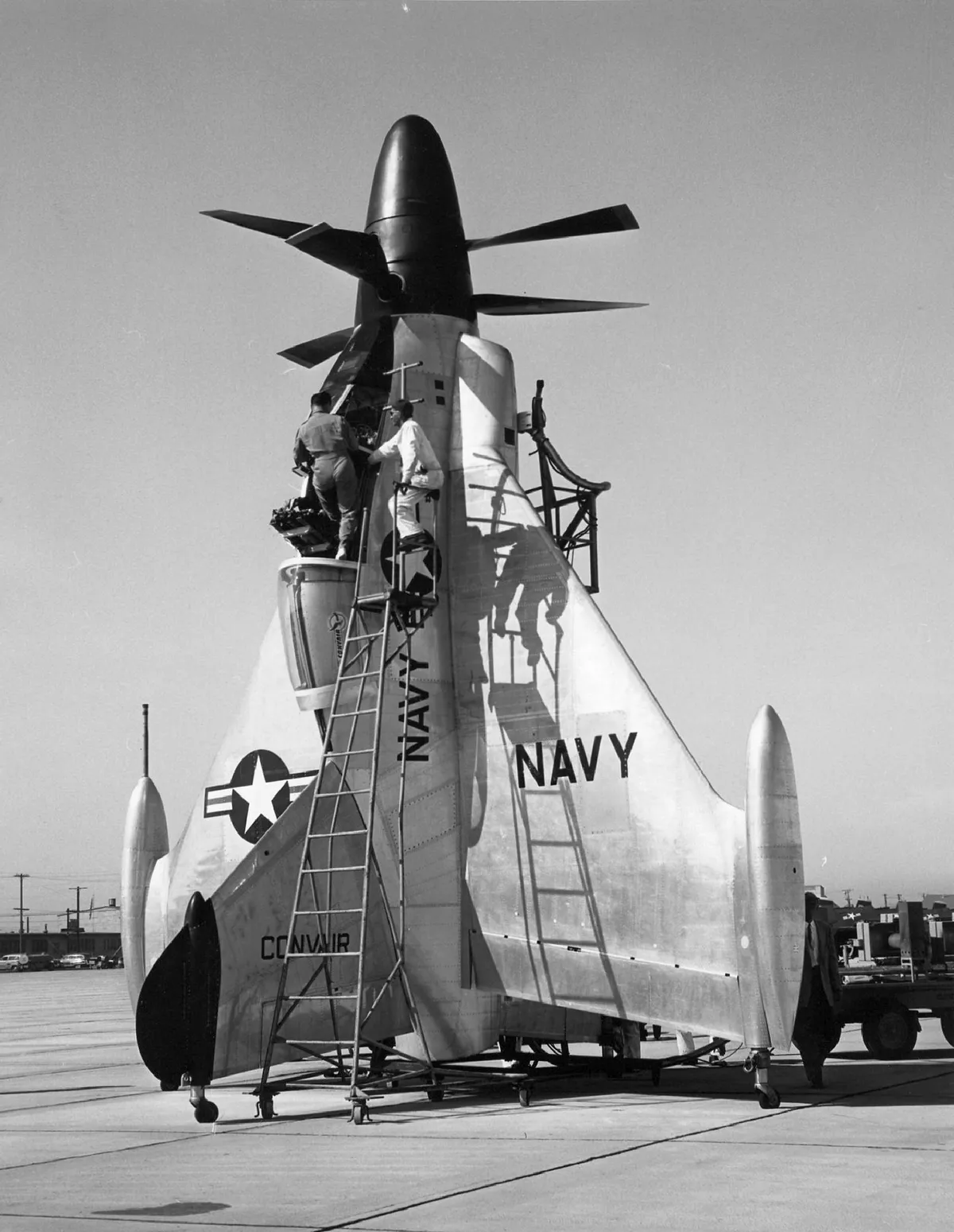
After putting the Aurora TVC Hopper project on pause last fall, I've been deep into learning about fixed-wing aircraft configuration, simulation, and modeling—exploring everything from OpenVSP optimization, stability analysis, CFD, GNC, and more. I'll be using a lot that I learned on the Aurora project for this vehicle as well.
What Is a Tailsitter
A tailsitter is a VTOL aircraft that takes off and lands vertically on its tail, then rotates 90° to fly horizontally like a conventional airplane. For example, the Shield AI V-Bat is a tailsitter that has become more well known in recent years. During forward flight, you're flying an airplane. And during the transition between the two? That's where things get really interesting.
The Goal
I'm designing and building a highly maneuverable, dual-ducted-fan tailsitter optimized for low-altitude flight in cluttered urban environments. The core of the aircraft is a a pair of 70 mm electric ducted fans capable of around 4.6 kg of total static thrust on 4S. The target all-up mass is 2.6–2.9 kg, giving me a solid thrust-to-weight ratio for aggressive maneuvers while keeping the platform manageable.
The design philosophy is simulation-first: validate everything through 6-DOF modeling, CFD analysis, and software-in-the-loop (SITL) testing before committing to hardware. The build process will be 3D-printing heavy, with a modular structure that allows for rapid iteration and easy repairs.
Next Steps
This is going to be a long project, and I'm breaking it down into stages:
- Initial conceptual design — OpenVSP optimization to find optimal planform configuration balancing efficiency and stability
- CFD analysis — Initial aerodynamic analysis and validation
- CFD refinement — Detailed flow analysis and design iteration
- MATLAB/Simulink modeling — 6-DOF flight dynamics and control system development
- Software-in-the-loop (SITL) testing — Validate control algorithms before hardware
- Bench testing — Validate the EDF and thrust vectoring system on a test stand
- Tethered hover — Prove out vertical flight control with a safety tether
- Free hover — Transition to untethered vertical flight
- Transition testing — The hardest part: mastering the 90° rotation from hover to forward flight
- Vision system integration — Integrate obstacle detection and navigation systems for complex environments
- Autonomous missions — Full end-to-end autonomous flight in complex environments
Along the way, I'll be sharing design updates, simulation results, build progress, and plenty of failures (because let's be honest, there will be failures). This project touches on aerodynamics, flight control, simulation, embedded systems, computer vision, and autonomous systems—basically everything I'm interested in, all rolled into one platform.
Follow Along
I'll be posting regular updates here, sharing video content on YouTube, and posting more frequent updates on X. I'm planning to document the entire design process, not just the finished product—so you'll see plenty of iterations, dead ends, and lessons learned along the way.